CRYSTAL FALLS, MICHIGAN
by Suzy Miller, August 25, 2026
WHERE IS CRYSTAL FALLS, MICHIGAN?
Crystal Falls is the county seat of Iron County in Michigan’s western Upper Peninsula. It sits along the Paint River, and U.S. Highway 2 passes directly through the town.
U.S. Highway 141 connects Crystal Falls with Iron River to the west and the Menominee area to the south. The Paint River eventually joins the Brule and Michigamme rivers before forming the Menominee River and flowing toward Lake Michigan.
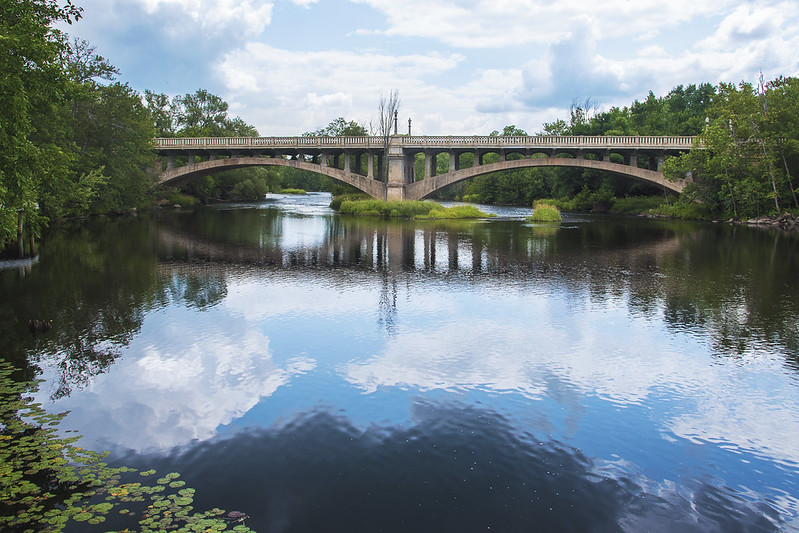
The community is an excellent base for exploring the western U.P. as it’s surrounded by forests, inland lakes and rivers.
The 2020 U.S. Census counted 1,598 residents, making Crystal Falls one of the region’s quieter small towns. A hundred years ago in 1920 the population was 1,567. That's not much of a change.
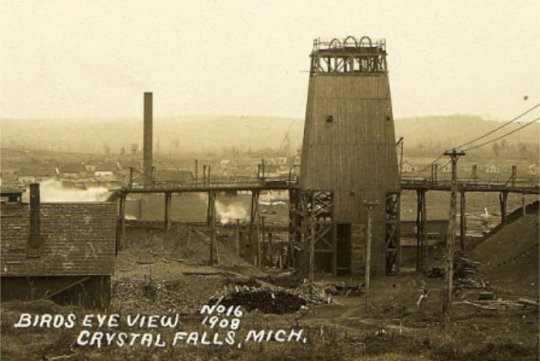 A Crystal Falls mine circa 1908
CRYSTAL FALLS, MICHIGAN HISTORY
Before Crystal Falls existed, the area was home to Native Americans, particularly Ojibwe (Chippewa) and Menominee people.
An 1851 federal survey recorded an Ojibwe village, cemetery and campground in the wider Crystal Falls area near Chicaugon Lake.
A local historical marker identifies U.S. surveyor Guy H. Carleton as the person who documented the village. There are also much earlier accounts of European missionary exploration in the area.
French explorer Étienne Brûlé is believed to have passed through the broader region in the early 1600s during the fur-trade era.
European-American settlement began around 1880 as prospectors searched for iron ore. Dr. D. M. Bond and Donald C. MacKinnon opened the Paint River Mine, while Solomon D. Hollister and George Runkel developed the Crystal Falls Mine.
A sawmill followed, and the discovery of rich iron deposits brought a rush of miners, lumbermen and merchants. The Chicago & North-Western Railway reached Crystal Falls in 1882, providing a vital connection for shipping ore.
The village was incorporated in 1889 and became Iron County’s seat the same year. The original Crystal Falls for which the town was named were submerged when a hydroelectric dam was built on the Paint River in 1891.
Today, the historic falls are no longer visible, although heavy spring runoff can produce a waterfall-like flow over the dam.
The Bristol-Youngstown Mine was the last operating iron mine within Crystal Falls, closing in 1969. Iron mining continued elsewhere in Iron County until 1978, when the Sherwood Mine in Mineral Hills closed.
CRYSTAL FALLS, MICHIGAN TODAY
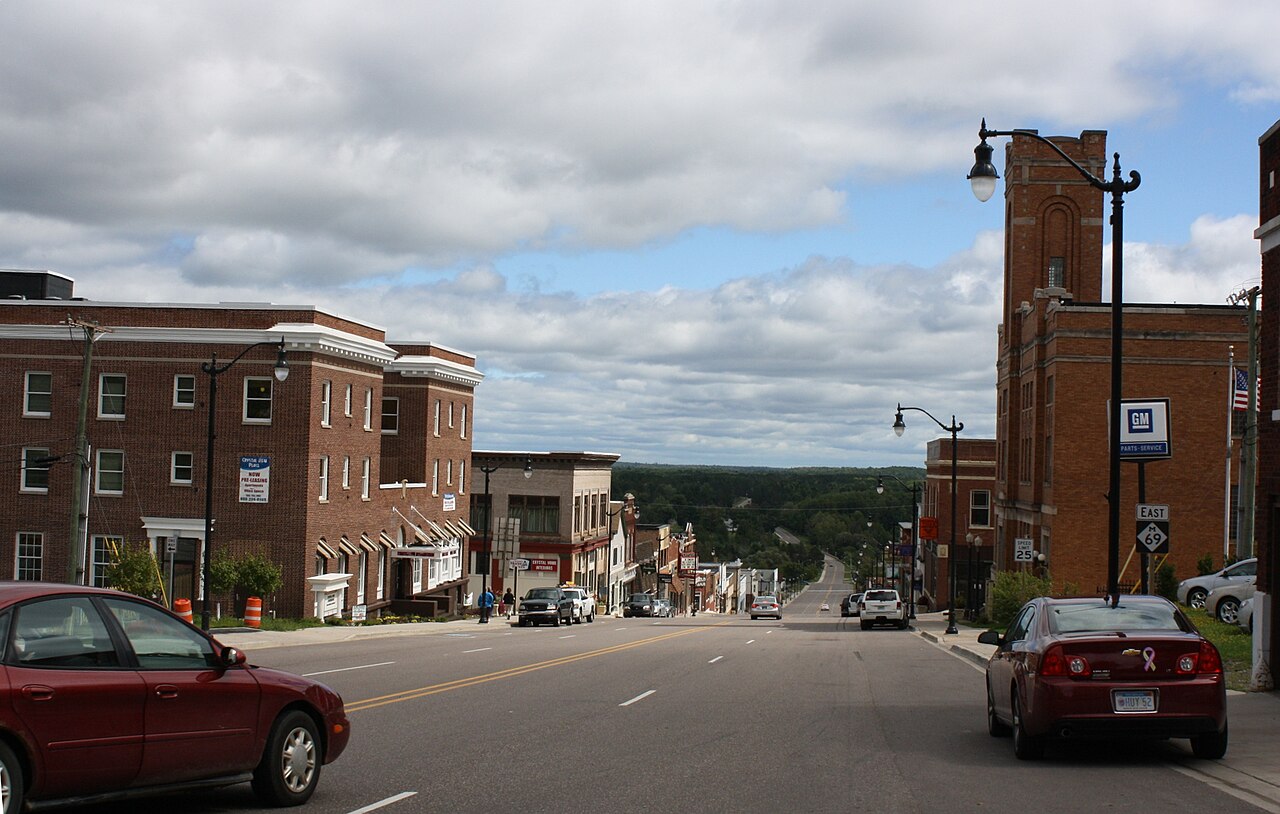
Nowadays, Crystal Falls has a relaxed, historic small-town atmosphere centered around Superior Avenue and the Paint River.
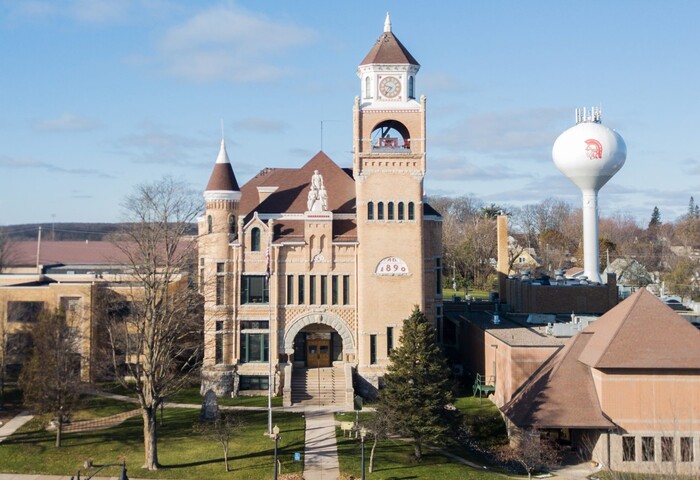
Reminders of the town's mining and lumbering past include the historic Romanesque 1890 Iron County Courthouse and the 1904 Harbour House Museum.
Shopping is modest but interesting rather than mall oriented. Antique hunters can browse Charlie's Emporium or Winks Woods for artisan crafts. Restaurants include Curious Pig and other locally owned cafes, diners and pizza shops.
While not a large shopping destination, the town has pleasant browsing for antiques, local art, and souvenirs, especially during festivals.
Outdoor recreation is one of Crystal Falls’ biggest attractions. Visitors can fish, canoe, hike, bike, camp, hunt, snowmobile and enjoy other winter sports.
Nearby Bewabic State Park is on Fortune Lake, while Horserace Rapids Nature Trail allows a scenic walk along the Paint River.
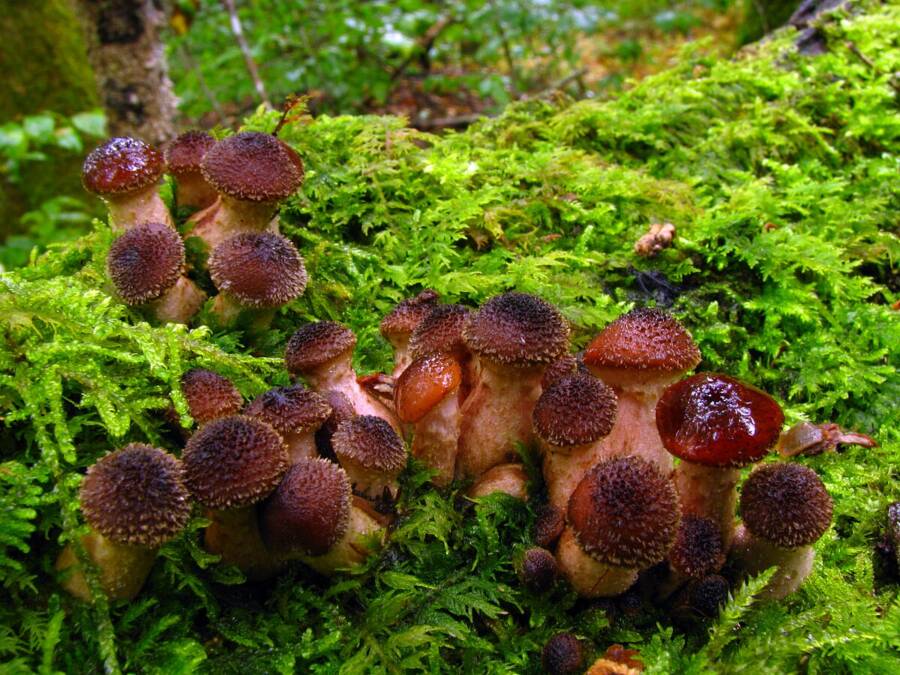
The quirky annual Humongous Fungus Fest celebrates the massive underground Armillaria gallica fungus discovered nearby, covering more than 37 subterranean acres.
This mushroom-themed festival draws crowds for a weekend of music, vendors, and community fun. Travelers seeking an authentic Yooper experience will love Crystal Falls.


CRYSTAL FALLS, MICHIGAN THINGS TO DO,
PLACES TO STAY, AND PLACES TO EAT
TRIPADVISOR INFO FOR CRYSTAL FALLS, MICHIGAN
CRYSTAL FALLS, MICHIGAN INTERACTIVE MAP
We send out a free newsletter now and then to keep you up to date on our website. Just put in your email and check the boxes below.
By Mike Miller, Copyright 2020-2026 YooperSecrets.com