BESSEMER, MICHIGAN
by Suzy Miller, August 24, 2026
WHERE IS BESSEMER, MICHIGAN?
Bessemer is in the far western Upper Peninsula of Michigan and is the county seat of Gogebic County. It lies along U.S. Route 2, about 7 miles east of Ironwood and a short drive west of Wakefield.
The city is part of the region known as “Big Snow Country,” shaped by heavy lake-effect snow from nearby Lake Superior.
County Road 513 (Black River Road/Moore Street) heads north from downtown about 15 miles through the Ottawa National Forest to Black River Harbor on Lake Superior’s shore, giving access to waterfalls and scenic shoreline.
Bessemer’s 2020 census population was 1,805. Compare this to 1920, a hundred years earlier, when the population was 5,402.
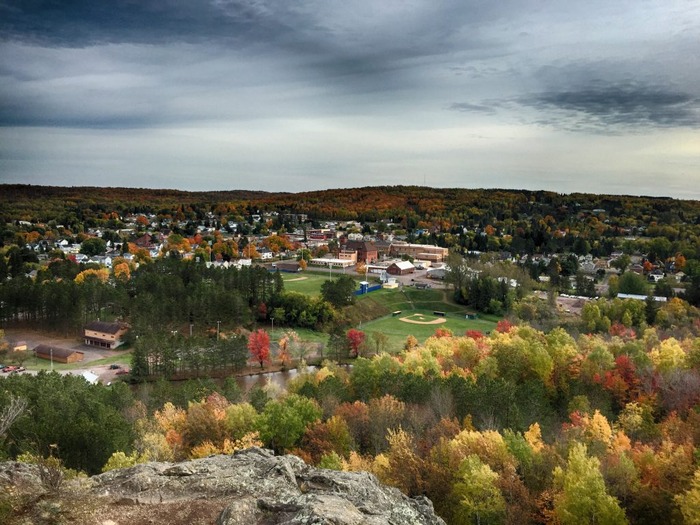
BESSEMER, MICHIGAN HISTORY
The Gogebic Range and its surrounding lands were the territory of the Ojibwe (Chippewa) peoples for centuries.
Sophie Street in Bessemer follows part of an old Flambeau Indian trail that linked an inland village south of the present city to the Lake Superior shore.
The 1842 treaty in which Chippewa bands ceded much of the western Upper Peninsula opened the area to later mineral exploration.
In 1880, hunter and trapper Richard Langford discovered iron ore under an overturned birch tree on what became Colby Hill.
Captain N. D. Moore is credited with making the find known, leading to development of the Colby property. Mining began in 1883, and the Colby Mine produced the first ore shipment from the Gogebic Range in 1884.
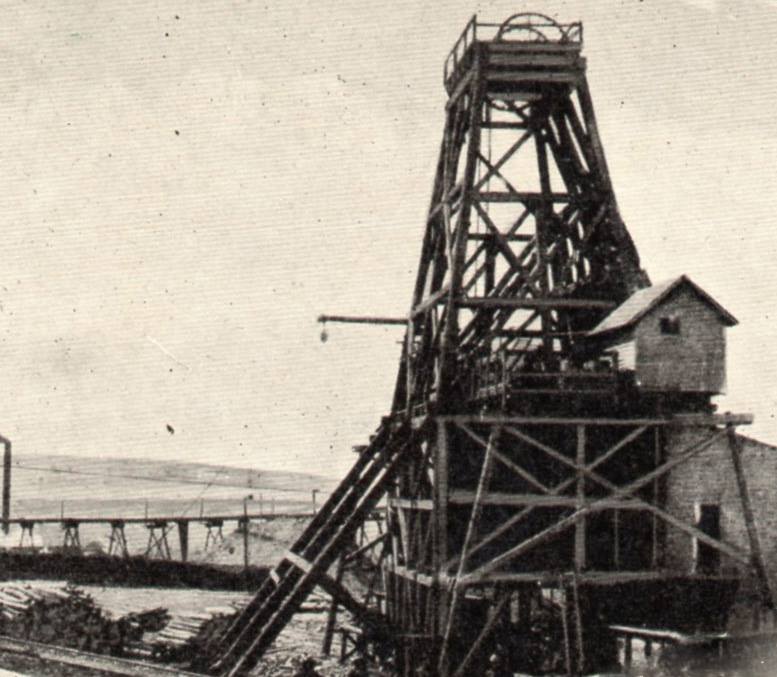 Colby Mine in Bessemer, Michigan
Courtesy of Bessemer Area Historical Society
That same year the Milwaukee, Lake Shore and Western Railroad (later the Chicago and North Western) reached the area while building toward Ashland, Wisconsin, and platted the town.
The railroad’s president named it for Sir Henry Bessemer, the English inventor of the steelmaking process that made high-grade iron ore especially valuable.
Early settlers included American surveyors and prospectors, followed by miners from Cornwall, Ireland, Scandinavia, French Canada, and Poland. Later waves brought Finns and Italians.
Log cabins appeared by 1882 (including the Dolan house on East Mary Street, a railroad and mining boarding house). The village was organized in 1887.
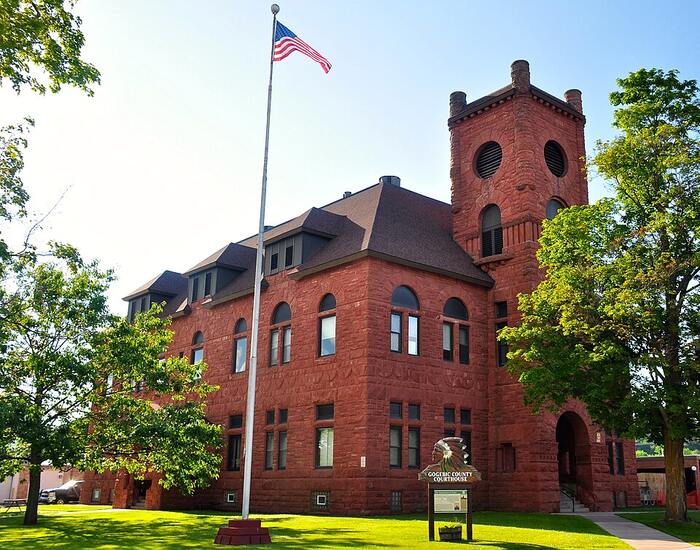
That year Bessemer also secured the Gogebic County seat (and the sandstone courthouse that still stands) after a contested election with Ironwood involving skullduggery.
Ironwood had secured the support of the railroad workers and people in Watersmeet. When Bessemer pioneers Paul Rutiman, Sr. and Joe Pecard found out about this, they plotted to change Ironwood's plan.
Ironwood men traveling to Bessemer to vote were made drunk and the train did not stop at the voting site. Ironwood lost and Bessemer gained the county seat.
By then, Bessemer had fifty saloons and little regard for the law. Miners were usually paid in gold which caused frequent robberies. This was a problem since the Sheriff was miles away in Ontonagon.
Almost all of the early settlers were young people who were strong and not afraid of hard work. Bessemer was incorporated as a city in 1889.
From 1884 through 1958 the county’s mines shipped more than 245 million tons of iron ore. The last local mine, the Peterson, closed in 1966, prompting economic decline as many residents left for factory work elsewhere.
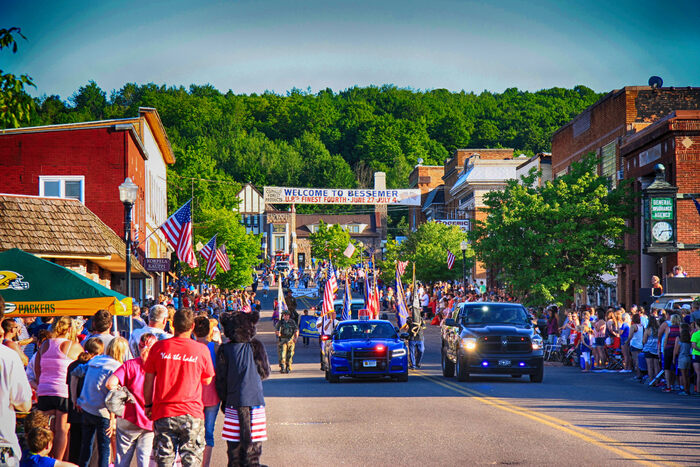 4th of July in Bessemer, Michigan
BESSEMER, MICHIGAN TODAY
Now Bessemer is a quiet, small, hilly city of about 1,800 people, protected from the wind by surrounding bluffs. It's centered on a compact downtown along South Sophie Street (U.S. 2).
Significant long-standing businesses include Abelman’s clothing store, established in 1887 and still operating. Another is Steiger’s Home Center (Ace Hardware), and The Leather and Gift Shop.
There is the Bessemer Public Library, and eateries like the Bread of Life Bakery and Café, known for its pasties and subs. Black River Crossing Bed & Breakfast is a beautiful place to stay.
While Bessemer isn't a major shopping destination, the walkable core offers local retail, services, and a few specialty and antique finds suited to visitors exploring the western U.P.
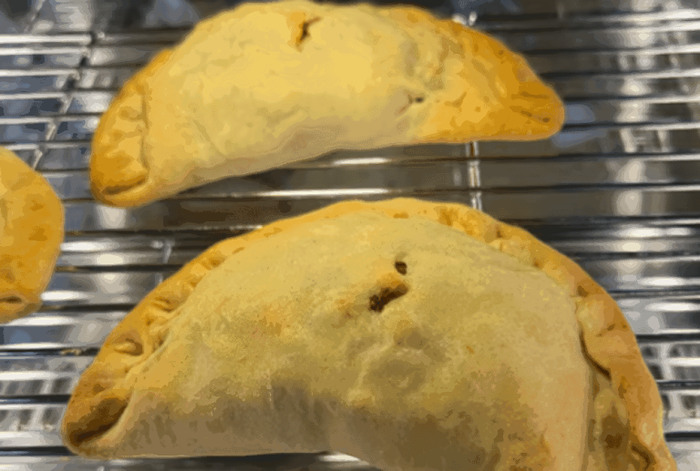 Pasties at Bread of Life Bakery & Cafe in Bessemer
Outdoor recreation defines daily life and tourism. Winter brings heavy snowfall that supports downhill skiing and snowboarding at nearby Big Powderhorn Mountain Resort and Snowriver (Blackjack) areas.
The Copper Peak ski-flying hill has an adventure chairlift and panoramic views. It has the only ski flying jump outside of Europe. Cross-country skiing, snowshoeing, and extensive snowmobile trails thrive in Big Snow Country.
In warmer months residents and visitors hike Bluff Valley Park (with overlooks of the city and Copper Peak). You can follow the Iron Belle Trail, and drive or walk the Black River National Scenic Byway.
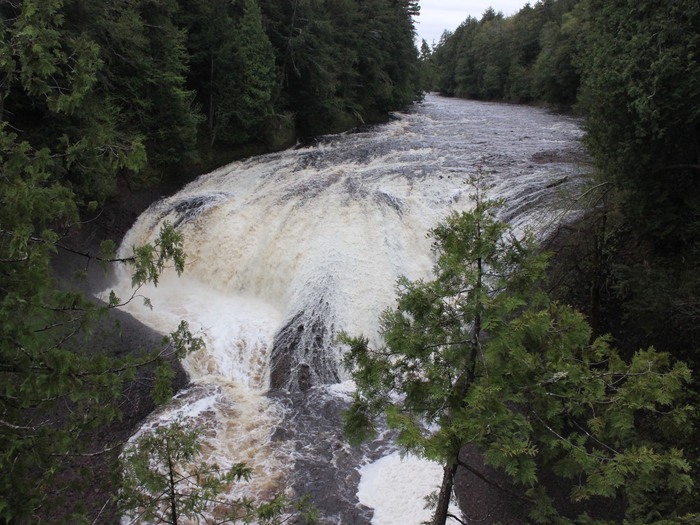
This goes to multiple waterfalls (including Potawatomi, Gorge, and Conglomerate Falls). Go to Black River Harbor for fishing, kayaking, picnicking, and Lake Superior access.
The Ottawa National Forest surrounds much of the area, providing additional trails and natural scenery.
Bessemer is a classic western Upper Peninsula community with its blend of mining heritage, modest downtown amenities, and four-season outdoor access.


BESSEMER, MICHIGAN THINGS TO DO,
PLACES TO STAY, AND PLACES TO EAT
TRIPADVISOR INFORMATION FOR BESSEMER, MICHIGAN
BESSEMER, MICHIGAN INTERACTIVE MAP
We send out a free newsletter now and then to keep you up to date on our website. Just put in your email and check the boxes below.
By Mike Miller, Copyright 2020-2026 YooperSecrets.com