- Home
- Yooper Counties
- Mackinac County Michigan
MACKINAC COUNTY, MICHIGAN
by Lee Miller, August 15, 2026
Population: 11,444
Pop. Density: 10.69 people/sq. mile
Land Area: 1,022 sq. miles
County Seat: St. Ignace
Towns: St. Ignace, Mackinac Island, Clark, Garfield, Moran, Portage, Marquette, Brevort, Newton, Cedarville, Hessel, Naubinway, Engadine, Curtis
 Mackinac County Map
Rand McNally, 1911
Ask a Yooper where Lake Huron meets with Lake Michigan, and they'll point you toward Mackinac County, a place sewn together by ferry docks, freighter horns, and the shadow of the iconic Mackinac Bridge.
It's one of only two counties in the country that touches two Great Lakes at once.
Mackinac County Formation & Naming
Mackinac was founded on October 26, 1818, when territorial governor Lewis Cass created it by proclamation as Michilimackinac County.
This was one of the very first counties in Michigan Territory. It wasn't formally organized under its current name until 1849.
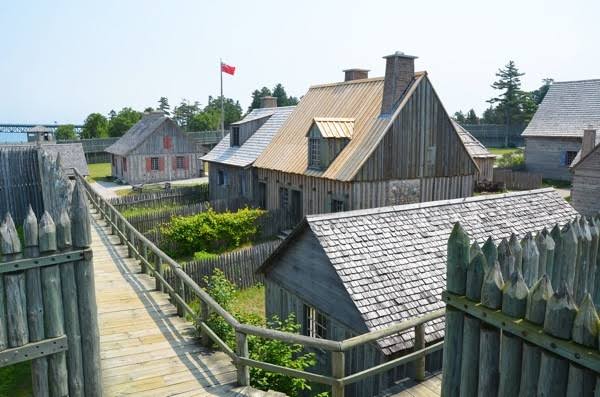
The name itself is a shortened, French-filtered version of "Michilimackinac," a term tied to the Straits of Mackinac and the fur-trading outpost that once anchored the area well before Michigan was a state.
Mackinac County Seat & Population
The county seat St. Ignace is a historic port town at the northern foot of the Mackinac Bridge. As of the 2020 Census, the county's population was 10,834.
It remains sparsely settled and deeply rural, the kind of place where the density is sometimes just ten people per square mile.
History of Mackinac County
The Straits of Mackinac were a gathering place for centuries for Anishinaabe peoples, drawn by the fish-plentiful waters which were natural crossroads between the lakes.
French traders and Catholic missionaries arrived in the 17th century, followed by British colonial interests after the fur trade's peak.
That layered history - French, British, and Native - made the straits one of the most contested and culturally rich corners of the Great Lakes.
When Michigan Territory organized in 1818, Michilimackinac County was among its first divisions, originally sprawling across much of the future Upper Peninsula and part of the Lower Peninsula.
Its borders shrank over the following decades as new counties split off. The Sault Tribe of Chippewa Indians retains land holdings within the county today, a living continuation of that deep Indigenous presence.
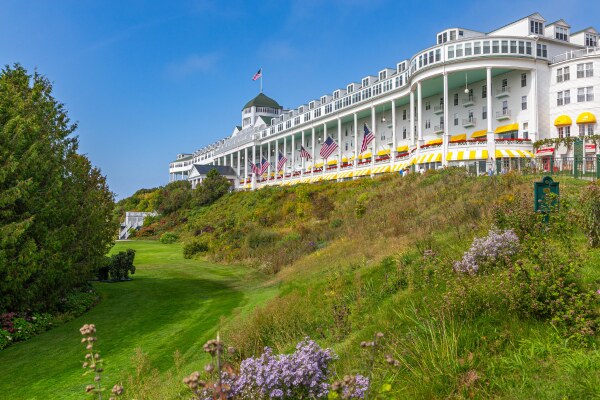
Fishing, fur trading, and later tourism shaped the local economy, with Mackinac Island's Victorian resort era in the late 1800s cementing the region's identity as a summer retreat for the wealthy. It has a reputation as a serene portal into a time when only horse-drawn carriages and pedestrians lined streets.


Mackinac County - Cities, Towns & Communities
St. Ignace and Mackinac Island are the county's best-known communities, alongside smaller townships like Moran, Brevort, and Hudson.
Bois Blanc Island, reachable only by ferry, offers a quieter off-grid alternative to its famous island neighbor. And yes - the Grand Hotel's porch really is that long.
Interactive Map of Mackinac County
We send out a free newsletter now and then to keep you up to date on our website. Just put in your email and check the boxes below.
By Mike Miller, Copyright 2020-2026 YooperSecrets.com