ONTONAGON, MICHIGAN
by Suzy Miller, August 30, 2026
WHERE IS ONTONAGON, MICHIGAN?
Ontonagon village sits at the mouth of the Ontonagon River where it empties into Lake Superior's southern shore in the western Upper Peninsula.
It’s the county seat of Ontonagon County and is at the northern end of US-45. M-38 and M-64 meet US-45 just south of downtown.
M-64 follows the Lake Superior shoreline west toward the Porcupine Mountains, about 15 miles away. Ontonagon is the closest town to the Porkies. It had 1,285 residents in the 2020 census, down from 1,494 in 2010.
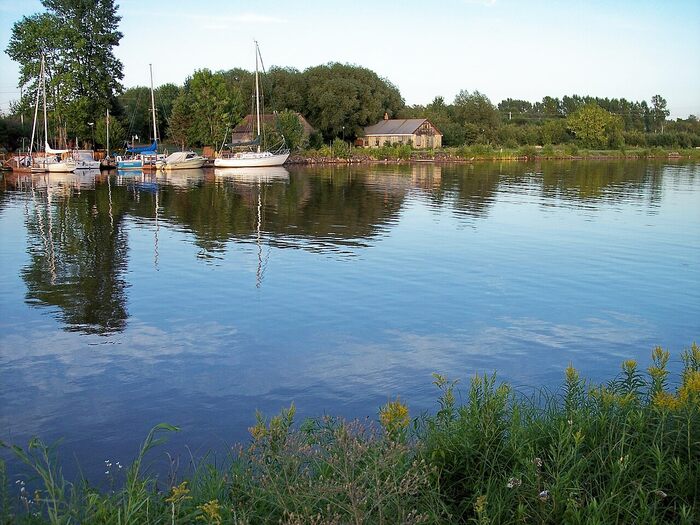 The Ontonagon River just above its mouth at Lake Superior.
From Tim Kiser/Malepheasant on Wikimedia
ONTONAGON, MICHIGAN HISTORY
Ojibwe people lived along the Ontonagon River for centuries, with a village documented near its mouth in the late 1700s. French fur traders were the first Europeans known to visit the region.
In 1771, English fur trader Alexander Henry attempted to mine copper near the river but abandoned the project because mining and transportation proved impractical.
The area became famous for the Ontonagon Boulder, a 3,708-pound piece of native copper in the river known to Indigenous people for generations. Jesuit missionary Claude Dablon confirmed its existence in 1667.
Michigan Territorial Governor Lewis Cass saw it during his 1820 expedition. The boulder was later removed and is now in the Smithsonian Institution. U.P. author, photographer & historian Mikel B. Classen has a great article about it on his website On the Road.
James K. Paul arrived at the river's mouth in 1842 with Nick Miniclerque, who spoke Ojibwe. Paul returned in 1843, becoming the first permanent white settler and an early founder of the community.
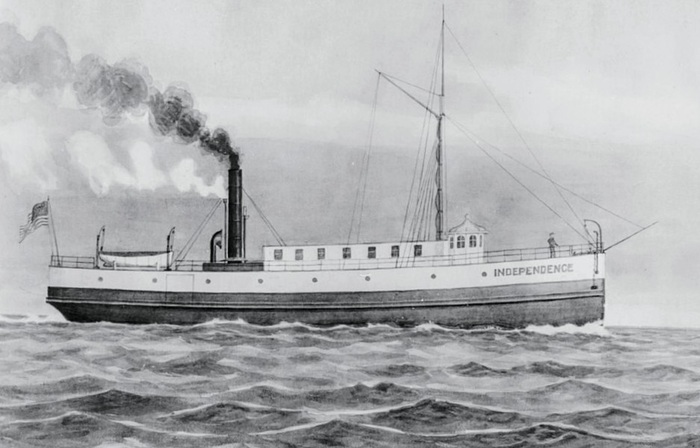 The Independence, the first steam-driven vessel on Lake Superior
A federal mineral agency opened in 1844 as prospectors arrived during the copper boom. In October 1845, Lake Superior's first steamboat, the Independence, began carrying supplies to Ontonagon and other mining camps.
Ontonagon became the county seat in 1846. By 1847, merchants operated a store and warehouse along the river. The harbor handled copper, lumber, fish and other products.
The first copper boom faded during the 1870s as local mines became less profitable and richer deposits near Houghton and Calumet attracted investment.
Mining returned on a larger scale at the nearby White Pine Mine, a major copper producer from the 1950s until the mid-1990s.
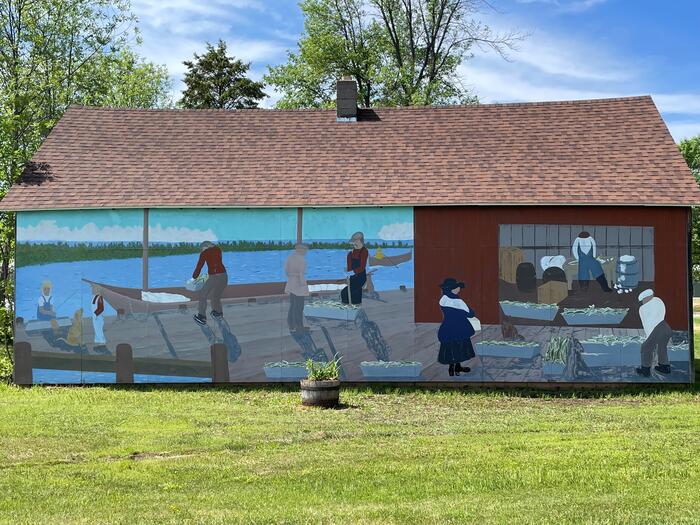
Ontonagon was an important fishing port until the lake trout population crashed due to lamprey invasion in the 1960s. Webber Park on Rose Island across from Ontonagon Marina has two historic fish houses with exterior murals depicting daily life.

ONTONAGON, MICHIGAN TODAY
Currently Ontonagon's economy relies largely on health care, retail, tourism, government and small service businesses.
Forestry and manufacturing remain part of the county economy but are less important than during the area's industrial era. Tourism has become increasingly important.
River Street (US-45) has restaurants and locally owned businesses, including gift shops, Nonesuch Gallery and Heritage Antiques.
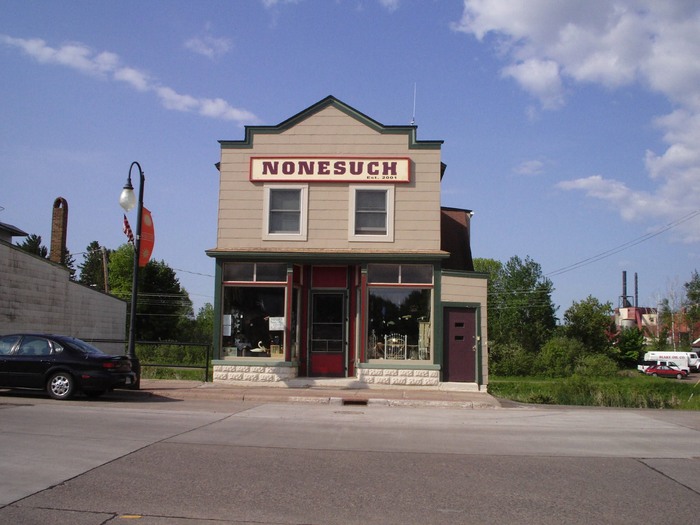 Nonesuch Gallery, Ontonagon, in historic 1916 building
The Ontonagon County Historical Museum covers the area's mining, logging and maritime history. The museum also owns the restored Ontonagon Lighthouse with its self-guided tours, and both are worth visiting.
Outdoor recreation is a major attraction. Visitors swim, kayak, fish, hunt for agates and walk Lake Superior's beaches.
The nearby Porcupine Mountains Wilderness State Park has hiking trails, waterfalls, camping, skiing and some of the U.P.'s most impressive wilderness scenery. The yearly Porcupine Mountains Music Festival is very popular.
Further out in the county is the spectacular Bond Falls, one of the most photographed falls in the entire upper peninsula. For such a small town, there's plenty to do and see in Ontonagon.
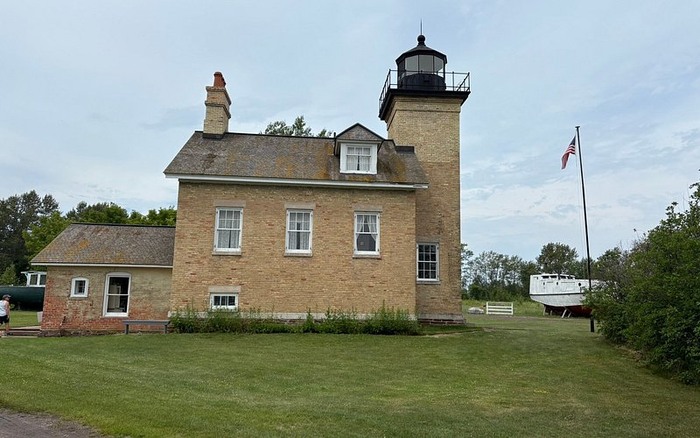 Ontonagon Lighthouse
ONTONAGON MICHIGAN THINGS TO DO,
PLACES TO STAY, PLACES TO EAT,
AND PLACES TO LIVE
TRIPADVISOR INFO FOR ONTONAGON, MICHIGAN
ONTONAGON, MICHIGAN REAL ESTATE
ONTONAGON, MICHIGAN INTERACTIVE MAP
We send out a free newsletter now and then to keep you up to date on our website. Just put in your email and check the boxes below.
By Mike Miller, Copyright 2020-2026 YooperSecrets.com