- Home
- Yooper Counties
- Alger County Michigan
ALGER COUNTY, MICHIGAN
Population: 8,842 (10th)
Pop. Density: 9.63 people/sq. mile (10th)
Land Area: 918 sq. miles (11th)
Water Area: 4,131 sq. miles (2nd)
County Seat: Munising
Towns: Au Train, Chatham, Christmas, Deerton, Grand Marais, Limestone, Munising, Shingleton, Trenary, Wetmore, Eben Junction
 Alger County Map
Rand McNally, 1911
Alger County stretches across a rugged corner of Michigan’s central Upper Peninsula, where deep forests, waterfalls, sandstone cliffs, and small communities meet the cold blue waters of Lake Superior.
Best known for Pictured Rocks National Lakeshore, the county combines spectacular scenery with a history shaped by the Ojibwe, fur traders, iron miners, lumbermen, and Great Lakes commerce.
ALGER COUNTY FORMATION AND NAMING
Alger County was officially organized on March 17, 1885, after being separated from Schoolcraft County.
It was named for Russell Alexander Alger, a prominent Michigan lumberman, Civil War general, and governor of Michigan at the time.
Alger later served as U.S. Secretary of War and as a U.S. senator from Michigan.
ALGER COUNTY SEAT AND POPULATION
The county seat and largest city is Munising, located on Munising Bay along the southern shore of Lake Superior.
The U.S. Census Bureau estimated Alger County’s population at 8,641 in 2025, down from 8,842 in the 2020 Census.
With fewer than 10 people per square mile of land, Alger remains a distinctly rural and sparsely settled part of the Upper Peninsula.
HISTORY OF ALGER COUNTY
Before Alger County existed, the Lake Superior shoreline was known to the Ojibwe, or Anishinaabe, who used the area for fishing, hunting, travel, and shelter.
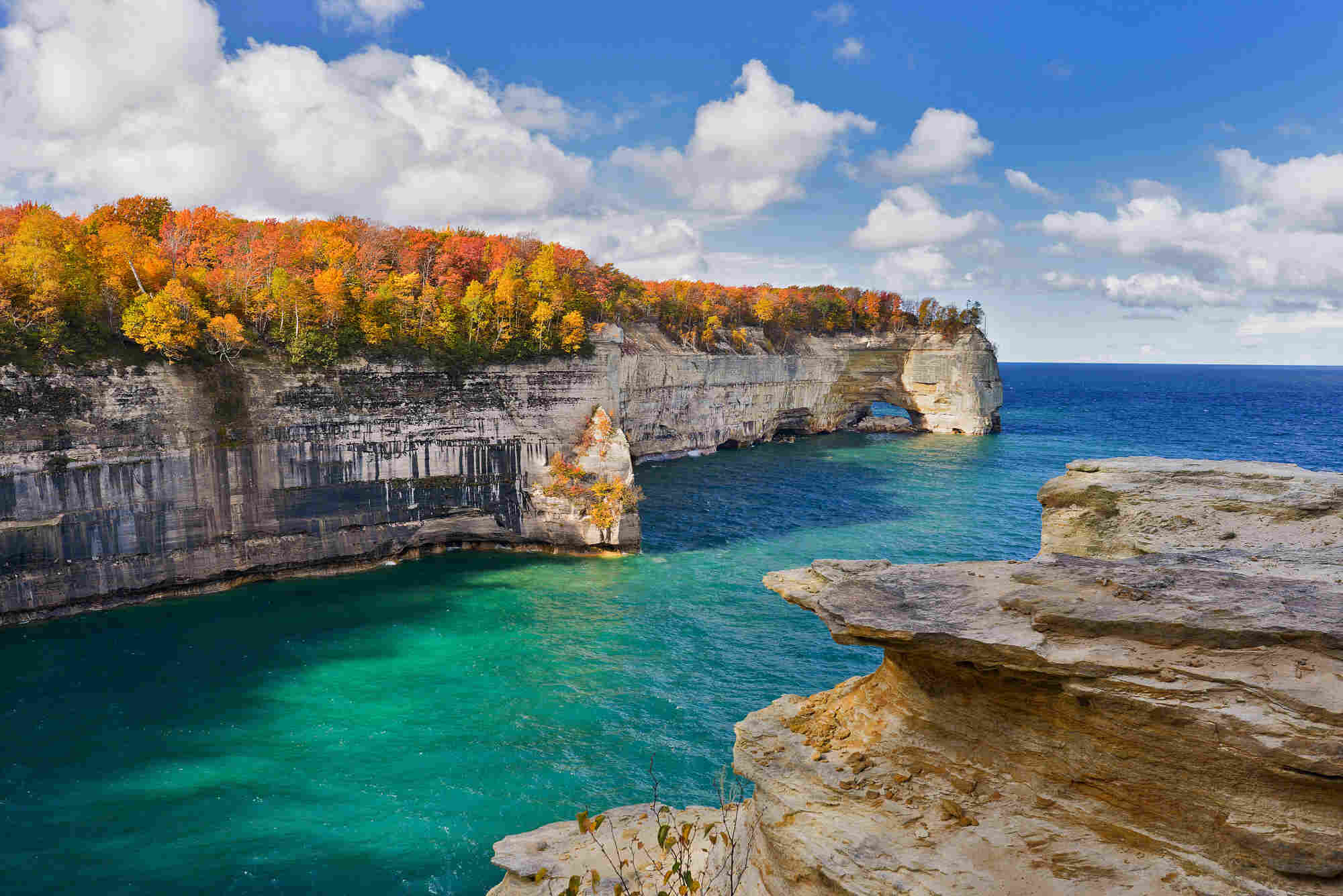
The colorful cliffs now called Pictured Rocks were known to Native people as Ishpabecca, meaning “high rocks,” and held cultural and spiritual significance.
French explorers and fur traders reached the southern Lake Superior country during the 1600s. By the late 17th century, voyageurs regularly traveled the shoreline, camping between what are now Grand Marais and Au Train.
Following periods of French and British control, the region became part of the United States. The American Fur Company established a post on Grand Island during the 1820s.
Much of the land in present-day Alger County was ceded to the United States by the Chippewa in the Treaty of Washington of 1836.
Permanent settlement increased during the mid-1800s as entrepreneurs pursued the region’s timber and iron resources.
Lumbering became especially important, bringing sawmills, docks, railroads, workers, and new settlements into the county.
Munising began developing rapidly in the 1890s after lumberman Timothy Nester recognized the potential of its protected harbor.
Sawmills, a tannery, docks, and other businesses followed. The county seat was moved from Au Train to Munising in 1901, reinforcing Munising’s position as Alger County’s commercial center.


ALGER COUNTY CITIES, TOWNS, COMMUNITIES
Munising is Alger County’s only incorporated city. Other important communities include Grand Marais, Au Train, Chatham, Christmas, Deerton, Shingleton, Wetmore, and Rock River.
Grand Marais sits beside a natural harbor near the eastern end of Pictured Rocks, while Au Train developed along Lake Superior west of Munising.
Christmas is hard to miss because of its holiday-themed name and giant roadside Santa Claus.
The county’s defining natural landmark is Pictured Rocks National Lakeshore, where multicolored sandstone cliffs rise above Lake Superior.
Large portions of inland Alger County are forested, continuing a landscape that has influenced local life since the days of fur trading and lumber camps.
Interactive Map of Alger County
We send out a free newsletter now and then to keep you up to date on our website. Just put in your email and check the boxes below.
By Mike Miller, Copyright 2020-2026 YooperSecrets.com