MUNISING, MICHIGAN
by Suzy Miller, August 27, 2026
WHERE IS MUNISING, MICHIGAN?
Munising is a small city on the southern shore of Lake Superior along Munising Bay in Michigan’s Upper Peninsula. It's the county seat of Alger County and sits at the junction of M-28 and M-94.
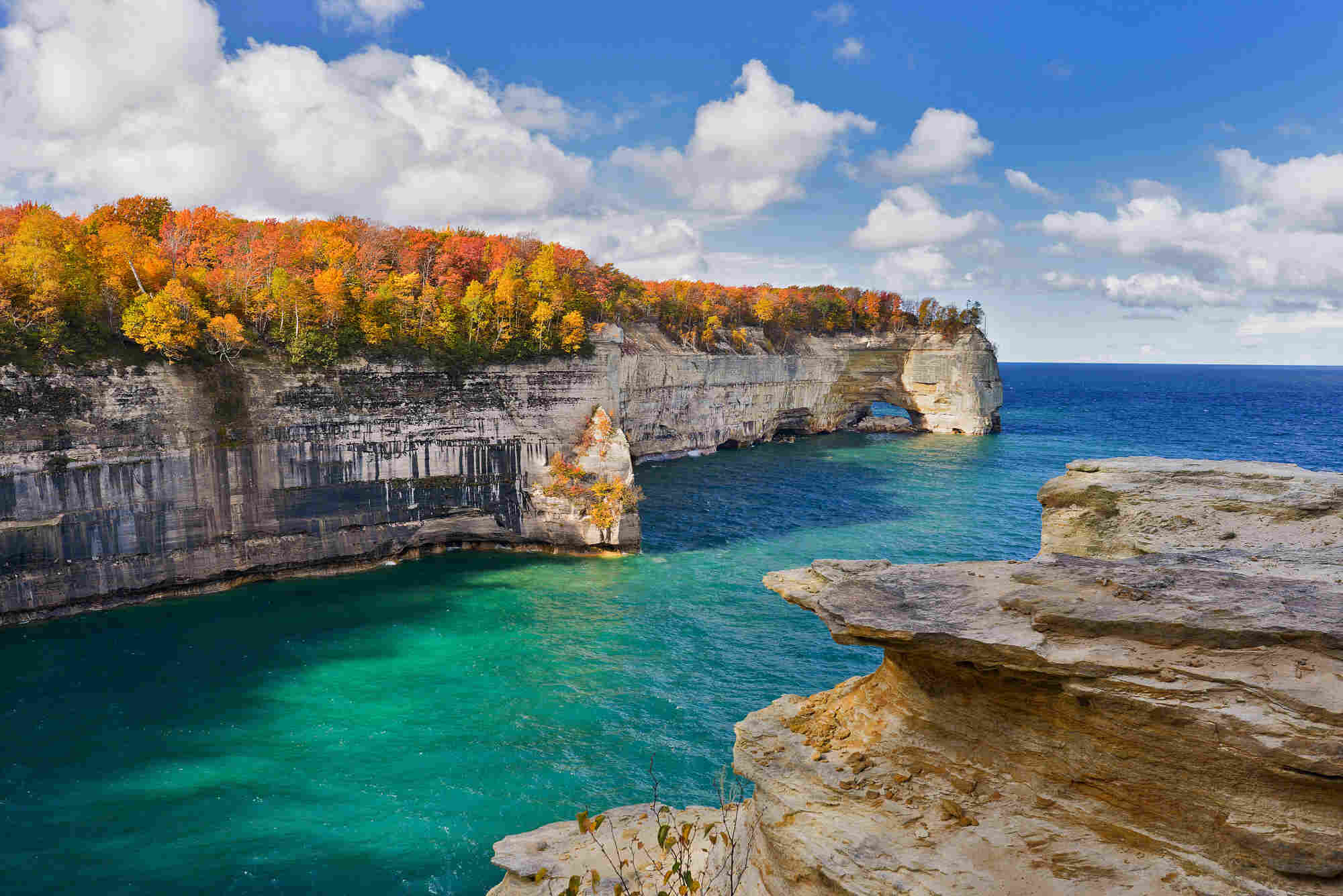
It is about 40 miles east of Marquette and just west of Pictured Rocks National Lakeshore. Grand Island lies offshore, while Hiawatha National Forest surrounds much of the area.
Munising had 1,986 residents in the 2020 U.S. Census. In 1920, its population was 5,037, more than twice today’s population.
MUNISING, MICHIGAN HISTORY
People have lived around Munising Bay and Grand Island for thousands of years. Archaeological evidence shows human habitation for at least 3,200 years.
The Ojibwe were the region’s principal indigenous people. Munising comes from the Ojibwe word “Minisiing,” meaning “at the island,” referring to Grand Island.
European explorers began passing through the region centuries ago. Jesuit missionary Father Jacques Marquette traveled Lake Superior in the 1600s.
In 1821, Henry Rowe Schoolcraft explored Lake Superior’s southern shore and documented Pictured Rocks and other landmarks. Father Frederic Baraga, the “Snowshoe Priest,” visited in the 1840s.
Fur traders also came. In 1840, Abraham Williams established a trading post on Grand Island and later settled there with his family.
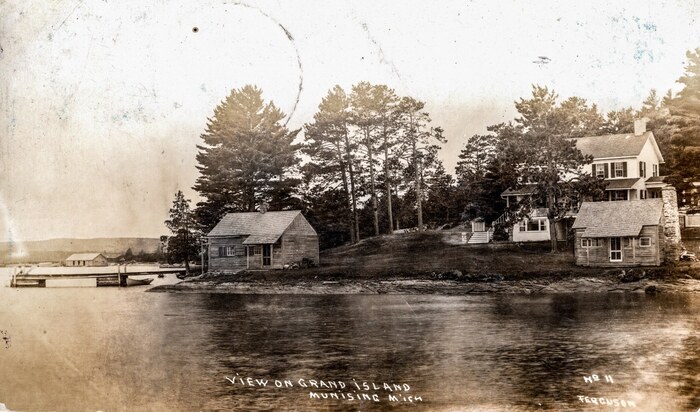 Williams Landing Fur Trading Post on Grand Island near Munising, circa 1940s
Developers laid out Grand Island City in 1850, but the planned community failed to grow. Ironmaking brought major development.
Peter White and Henry Mather organized the Schoolcraft Iron Company and built a blast furnace near Munising Creek in 1867.
Hundreds of workers and their families arrived to produce pig iron from Marquette-area ore. Financial problems and shortages plagued the furnace, which closed in 1877.
Lumbering, railroads, tanneries and paper manufacturing helped Munising recover. It became a village in 1897, the Alger County seat in 1902 and a city in 1915.
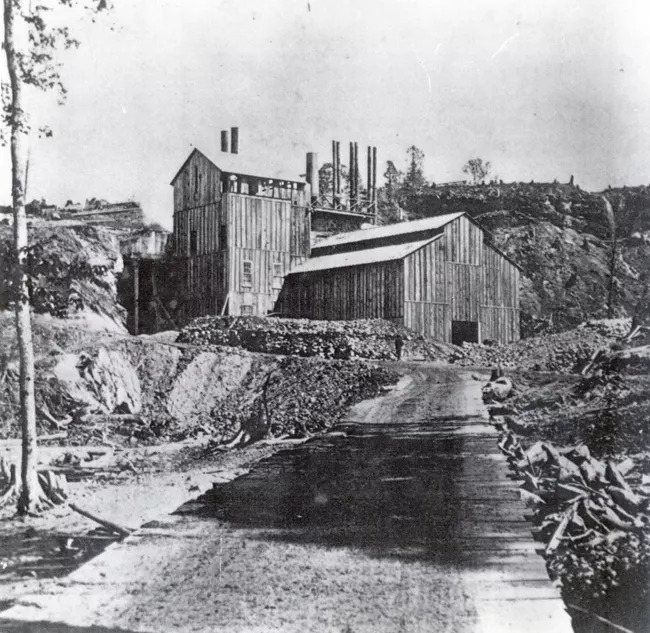 Schoolcraft Blast Furnace at original location on Munising Creek. Munising Falls is visible in the distance at the upper right-hand corner.
Courtesy of Alger County Historical Society
MUNISING, MICHIGAN TODAY
Munising is probably best known as the gateway to Pictured Rocks National Lakeshore. Tourism leads the local economy, but manufacturing remains important.
Mativ operates Munising’s long-standing specialty-paper mill. Timber Products manufactures hardwood lumber, veneer and wood components.
Downtown has locally owned specialty shops, bakeries, restaurants, cafés, breweries, and galleries. Visitors can shop for regional gifts, art and outdoor gear. Open Wings Pottery and UP~Scale Art feature work by U.P. and Great Lakes artists.
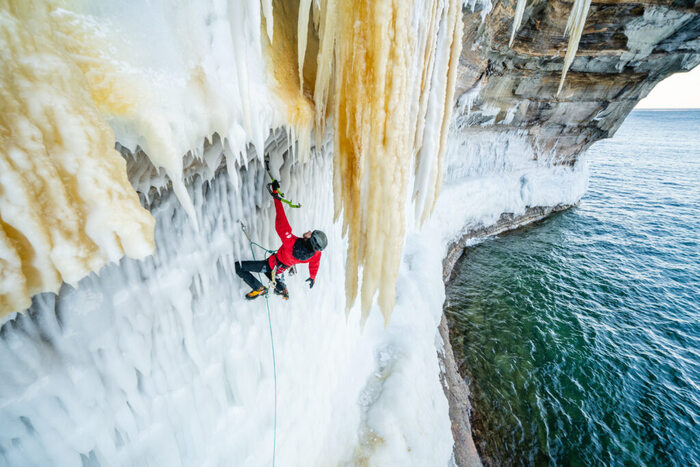
Outdoor recreation is Munising’s biggest attraction. Visitors hike, kayak, bike, fish, ski, snowshoe and snowmobile.
Pictured Rocks has sandstone cliffs, beaches, sea caves and waterfalls. Grand Island and Hiawatha National Forest provide even more recreation.
More than a dozen nearby waterfalls make Munising a popular destination for waterfall hunters. The annual Michigan Ice Fest celebrates the area’s ice climbing.
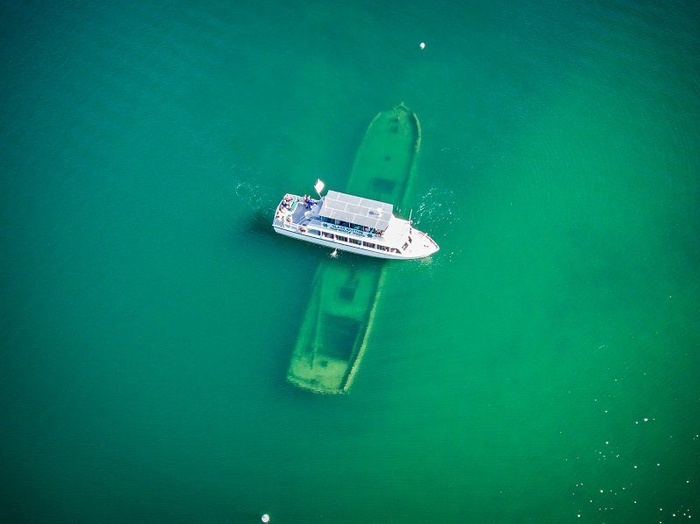
A Yooper secret about Munising is Glass Bottom Shipwreck Tours. Their glass-bottom boat visits two Lake Superior shipwrecks: the Bermuda, which sank in 1870, and the Herman H. Hettler, which sank in 1926.
The tours pass by cliffs, caves, beaches, and Grand Island’s East Channel Lighthouse, built in 1867.


MUNISING MICHIGAN THINGS TO DO,
PLACES TO STAY, PLACES TO EAT,
AND PLACES TO LIVE
TRIPADVISOR INFORMATION FOR MUNISING, MICHIGAN
MUNISING, MICHIGAN REAL ESTATE
GRAND ISLAND NATIONAL RECREATION AREA
MUNISING, MICHIGAN INTERACTIVE MAP
We send out a free newsletter now and then to keep you up to date on our website. Just put in your email and check the boxes below.
By Mike Miller, Copyright 2020-2026 YooperSecrets.com