- Home
- Yooper Counties
- Menominee County Michigan
MENOMINEE COUNTY, MICHIGAN
Population: 23,502 (6th)
Pop. Density: 22.51 people/sq. mile (6th)
Land Area: 1,044 sq. miles (8th)
Water Area: 294 sq. miles (12th)
County Seat: Menominee
Towns: Carney, Cedar River, Daggett, Harris, Hermansville, Ingalls, Menominee, Nadeau, Perronville, Powers, Spalding, Stephenson, Wallace, Wilson
 Menominee County Map
Rand McNally, 1911
At the southern gateway to Michigan's Upper Peninsula, Menominee County blends deep forests, winding rivers, and a scenic shoreline along Green Bay.
Rich in Native American heritage and logging history, this county offers a welcoming introduction to the U.P. while retaining the quiet charm and independent spirit that define Yooper country.
Menominee County, Michigan
Formation & Naming
Menominee County was officially formed on March 10, 1861, when it was created from portions of Delta County. It takes its name from the Menominee (Mamaceqtaw) Tribe, whose traditional homeland extended across northeastern Wisconsin and parts of Michigan's Upper Peninsula.
The name "Menominee" is commonly translated as "People of the Wild Rice," reflecting the importance of wild rice to the tribe's culture and way of life.
The county's history is closely tied to both the Menominee people and the lumber industry that helped shape this corner of Michigan during the nineteenth century.

Menominee County, Michigan History
For nearly a thousand years the region was home to Native peoples, especially the Menominee, whose communities were closely tied to the forests, rivers, fisheries, and wild rice beds of the western Great Lakes.
French explorers, missionaries, and fur traders began traveling through the region during the 1600s, using the Menominee River as an important transportation route.
Menominee County was created from part of Delta County in 1861 and was originally named Bleeker County. When county government was established in 1863, the name was changed to Menominee in honor of the Menominee people.
Lumbering transformed the county during the second half of the 19th century. Vast stands of white pine covered the region, while the Menominee River provided a natural highway for floating logs downstream to sawmills.
Menominee, at the river's mouth on Green Bay, grew into a major lumber center alongside neighboring Marinette, Wisconsin. By 1890, the twin cities had 23 steam-powered lumber mills.
The lumber boom attracted workers and immigrants, including Germans, Poles, Norwegians, Swedes, and Danes. Menominee grew rapidly, becoming a city in 1883 and developing modern utilities, streetcars, businesses, and cultural institutions.
As the great pine forests were depleted in the early 1900s, lumbering declined. Agriculture, manufacturing, paper production, fishing, and other industries became increasingly important.
Today, Menominee County's historic communities, surviving buildings, and working forests still reflect the industries and people that shaped this distinctive corner of Michigan's Upper Peninsula.
Menominee County, Michigan
County Seat and Population
The county seat is Menominee, a historic waterfront city located where the Menominee River flows into Green Bay.
Across the river lies Marinette, Wisconsin, and together the two communities have long shared economic and cultural ties.
According to the U.S. Census Bureau, Menominee County's estimated population was 23,050 in 2024.
Like many rural Upper Peninsula counties, its population has gradually declined over recent decades, yet it remains a close-knit community with strong roots in manufacturing, forestry, agriculture, and outdoor recreation.
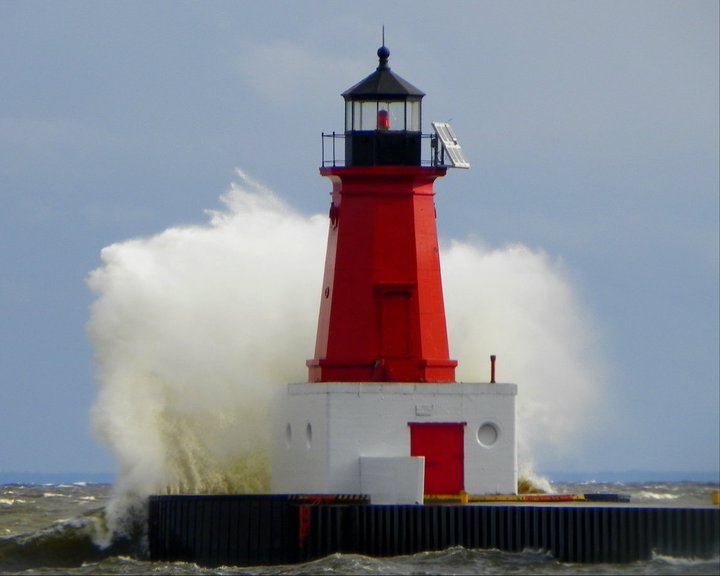


Menominee County, Michigan
Cities, Towns, and Communities
Besides the city of Menominee, the county includes the cities of Stephenson and Norway's neighboring influence just beyond the county line, while the Village of Carney serves as another important local center.
Smaller communities include Cedar River, Daggett, Ingalls, Wallace, Gourley, Nathan, and Nadeau, each reflecting the county's rural character and Scandinavian and French-Canadian heritage.
The Cedar River area is known for excellent fishing and boating on Green Bay, while the Menominee River has long been vital for transportation, hydroelectric power, and recreation.
Inland, forests, farms, and wildlife create a landscape that feels distinctly "Up North," offering countless opportunities to experience the quieter side of the Upper Peninsula.
Menominee County may sit at the doorstep of the Upper Peninsula, but it possesses all the qualities visitors associate with true Yooper country: beautiful water, rich history, welcoming communities, and a strong connection to the land.
Whether you're drawn by its Native American heritage, its lumber-era past, or its peaceful shoreline and forests, Menominee County is a memorable place that reflects the enduring character of Michigan's Upper Peninsula.
Interactive Map of Menominee County
We send out a free newsletter now and then to keep you up to date on our website. Just put in your email and check the boxes below.
By Mike Miller, Copyright 2020-2026 YooperSecrets.com